


In this article
Does rain actually help air quality? Step outside after a storm, and it certainly feels like it. The haze lifts, the air smells fresh, and the assumption is that rain has done the work. Often it has, but research shows wind plays a bigger role than most people expect. And for fine particles and indoor air, the picture is different again.

Does Rain Help Air Quality? The Short Answer
Rain genuinely improves air quality for larger airborne particles, but its effect on fine particulate matter is limited, and it can even create new indoor air quality challenges at the same time.
A study published in Aerosol and Air Quality Research tracked 18 separate rain and snow events and found that in 15 of them, overall air quality improved:
-
The Air Quality Index (AQI) dropped by around 23% while it was raining and 32% in the hours after.
-
Fine particulate matter (PM2.5) fell by 27% during rain and 42% afterward.
So here, we can see rain usually helps, and it often grows once the storm has passed.
But 3 events out of the 18 went the other way; AQI rose rather than fell. In those cases, the atmosphere stayed more stagnant after the rain, trapping pollutants near ground level rather than letting them disperse.
Rain alone doesn't guarantee cleaner air, and what happens inside your home during a rainstorm is a separate story entirely.
|
How Rain Affects Outdoor Air Quality
Rain's cleansing effect is real, but it works differently depending on the pollutant type and rainfall intensity.
Rain acts as a natural scrubber for larger airborne particles, removing them through two main mechanisms.
-
The first is washout (below-cloud scavenging): raindrops collide with particles as they fall, capturing dust, pollen, and coarser particulate matter and carrying them to the ground.
-
The second is rainout (in-cloud scavenging): pollutants are absorbed into water droplets during cloud formation, before rain falls at all.
Both processes are most effective for larger particles, including visible dust, mold spores, and intact pollen grains. After a heavy storm, the visible drop in haze is largely the result of these two mechanisms working together.
Why Rain Doesn't Always Improve Air Quality as Much as People Expect
The particles most harmful to respiratory health, PM2.5, are the ones rain struggles to remove effectively.
PM2.5 particles are small enough to pass deep into the lungs, and their tiny size makes them harder for raindrops to capture.
Light drizzle has a relatively weak effect on PM2.5 concentrations. Heavy rain does better, but the improvement is less dramatic than the post-storm freshness suggests.
Wind is often doing more work than rain in these situations. Multiple studies show that wind disperses PM2.5 far more effectively than rainfall alone, with wind speed correlating more strongly with PM2.5 reduction than precipitation does.
|
Can Rain Ever Make Air Quality Worse?
In some conditions, rain reduces air quality rather than improves it.
Normally, air circulates vertically after a storm, carrying pollutants upward and thinning them out across a larger volume of atmosphere. When that circulation stalls, pollutants stay closer to ground level rather than dispersing.
Combined with humidity-related emission changes, local air quality can worsen in the hours after rain. The Aerosol and Air Quality Research study found exactly this pattern in 3 of its 18 events: AQI rose after rain, not because of the rain directly, but because of what the atmospheric conditions allowed to happen once it stopped.
The Allergy and Pollen Connection
Rain initially suppresses airborne pollen, but the relief is often short-lived.
As rain falls, it temporarily weighs down and washes away pollen grains. For people with seasonal allergies and asthma, the first hours of rainfall can feel noticeably easier.
But humid post-rain conditions create a different problem: pollen grains can absorb moisture, swell, and burst, releasing far smaller allergenic fragments into the air. These fragments are harder for the body's natural defenses to filter and can reach deeper into the airways than intact grains.
For allergy sufferers, the hours immediately after rain can be a higher-risk period, not lower.

What Happens to Indoor Air Quality During Rainy Weather?
Rainy weather raises indoor humidity levels, and that shift can actively compromise the air quality inside your home.
As outdoor humidity climbs during a rain event, moisture-laden air infiltrates through gaps in windows, doors, and walls. When indoor relative humidity exceeds 60%, conditions become favorable for mold growth and dust mite activity, both of which release particles and allergens into the air.
There's also a redistribution effect. Particles that settled on surfaces during drier periods can become airborne again as air movement and humidity shift indoors.
The result is that a rainstorm, while partially cleansing the outdoor environment, can stir up what was already inside your home.
|
How Smart Air Purifiers Respond to Rainy Conditions
A smart air purifier with real-time sensors responds to what's actually happening in your air, not to what the weather looks like outside.
Indoor particle counts, humidity, and volatile organic compound levels can shift quickly during a rainstorm. A purifier that monitors these conditions and adjusts its output automatically responds to those shifts without any input from you. That responsiveness is exactly what weather-driven changes call for, because conditions often don't give you advance warning.
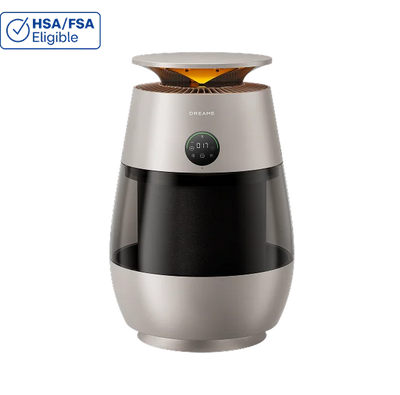
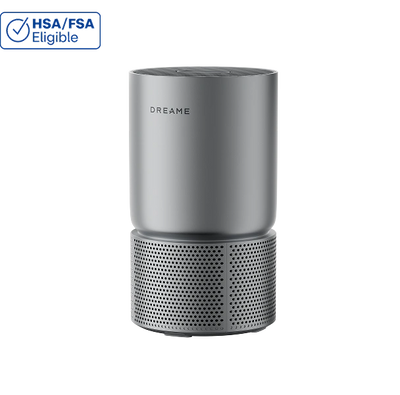
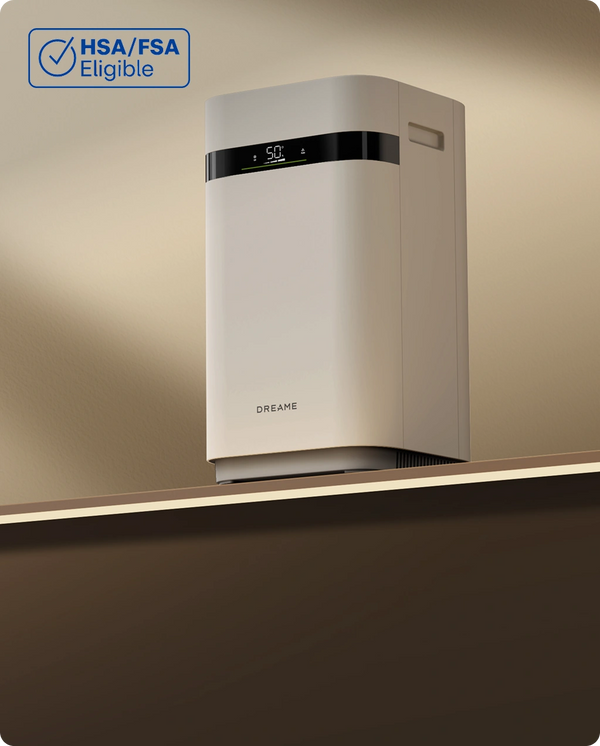
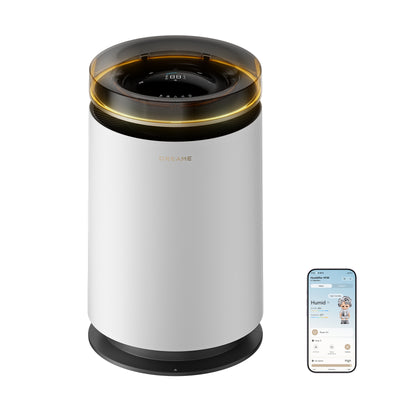
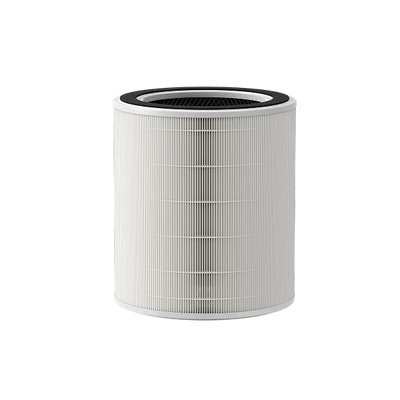
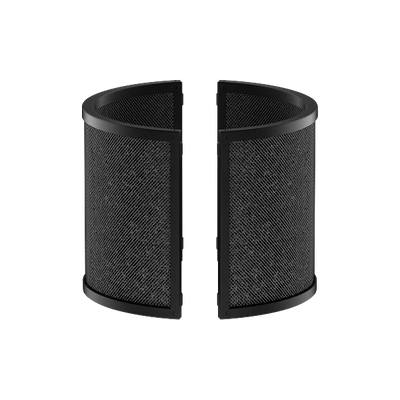
When conditions shift during a rainstorm, the Dreame AirPursue™ PM20 Purifier picks it up. Its sensors track humidity alongside fine particles (PM2.5) and VOCs in real time, and the unit adjusts its filtration output automatically in response. You don't need to notice the change. It already has.

Practical Ways to Maintain Better Air Quality During Rainy Seasons
The most effective approach during rainy weather combines ventilation management, source control, and active indoor filtration. Here’s what we recommend doing:
-
Check outdoor AQI before ventilating: Opening windows after rain only improves indoor air when outdoor air quality is genuinely better than what's inside. Check the AQI first rather than relying on how the air looks or smells.
-
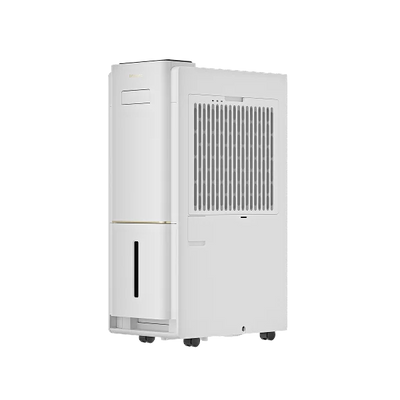
Keep indoor humidity between 30% and 50%: The EPA recommends this range to discourage mold and dust mite activity while avoiding excessive dryness. A dehumidifier helps in persistently damp climates.
-
Run your air purifier continuously through rain events: Don't wait until you notice a problem. Proactive filtration during and after a storm maintains a cleaner baseline indoors when post-storm pollutant redistribution is most likely.
-
Time your window-opening carefully: Wait for outdoor humidity to drop before ventilating post-rain. In areas near high-traffic roads or industrial zones, wait longer and re-check the AQI.
-
Address indoor humidity sources: Damp basements, wet carpets, or poorly sealed crawl spaces are the most common causes of sustained indoor humidity spikes after rain. Treat the source, not just the symptoms.
For households managing smoke events, protecting indoor air from wildfire smoke follows similar principles: seal the home, run filtration continuously, and check the AQI before ventilating.
What Rain Really Means for Air Quality and Your Home Environment
Rain helps, but not as completely as most people assume. It clears larger particles reliably, but PM2.5 is less affected, and indoors, rising humidity can create its own air quality challenges regardless of what's happening outside.
The AirPursue™ PM20 monitors humidity alongside fine particles and VOCs in real time, adjusting automatically when conditions shift. Run it through rain events and check the outdoor AQI before you ventilate.
Frequently Asked Questions
Does Rain Help Get Rid of Smoke in the Air?
Yes, to a degree. Rain helps clear larger smoke particles through washout, but fine PM2.5 particles from wildfire or wood smoke are less effectively removed. Heavy, sustained rainfall performs better than light drizzle, but post-rain PM2.5 levels can still remain elevated enough to affect air quality both indoors and out.
Is Rainwater Dirtier Than Tap Water?
Yes. Rainwater collects pollutants, dust, pollen, and particulate matter as it falls through the atmosphere, meaning it carries much of what it has scavenged from the air. It's not suitable for drinking without treatment, but it does confirm the cleansing process is working.
Why Does the Air Smell Cleaner After It Rains?
The fresh smell after rain is largely petrichor, a compound produced when rain reacts with oils in dry soil, and geosmin released by soil bacteria. It's a real chemical response, not an air quality measurement. The scent signals rain activity, not necessarily cleaner air, though both often occur together.
Does Rain Remove Wildfire Smoke and PM2.5 Particles?
Partially. Rain can reduce some PM2.5 from wildfire smoke, but fine particles often persist even after heavy rainfall. The reduction depends on storm intensity, duration, and accompanying wind conditions. Checking the AQI rather than relying on visual cues or smell gives a more accurate read of conditions after a smoke event.
References:
-
Fanxuan Yu et al. (2021) — Effects of Rain and Snow on the Air Quality Index, PM2.5 Levels, and Dry Deposition Flux of PCDD/Fs. Aerosol and Air Quality Research, Vol. 21, Issue 8. Available at: https://aaqr.org/articles/aaqr-21-06-oa-0158
-
Liu H. et al. (2017) — Influences of wind and precipitation on different-sized particulate matter concentrations (PM2.5, PM10, PM2.5–10). Meteorology and Atmospheric Physics. Available at: https://link.springer.com/article/10.1007/s00703-017-0526-9
-
Nature Index — Aerosol Scavenging Processes in Atmospheric Systems. Springer Nature. Available at: https://www.nature.com/nature-index/topics/l4/aerosol-scavenging-processes-in-atmospheric-systems
-
Wu C. et al. (2023) — Impact analysis of meteorological variables on PM2.5 pollution in the most polluted cities in China. PMC/NCBI. Available at: https://pmc.ncbi.nlm.nih.gov/articles/PMC10359771/
-
Damialis A. et al. (2022) — Thunderstorm asthma: What do we know and what can we do? PMC/NCBI. Available at: https://pmc.ncbi.nlm.nih.gov/articles/PMC8943692/
-
U.S. EPA — Biological Pollutants' Impact on Indoor Air Quality. Available at: https://www.epa.gov/indoor-air-quality-iaq/biological-pollutants-impact-indoor-air-quality
-
American Chemical Society — Geosmin: The Smell of Rain. Available at: https://www.acs.org/molecule-of-the-week/archive/g/geosmin.html
